

WOMEN SHIFTING GEARS: Monica Lazarotti – "In my role, it is important always and above all to be empathetic"
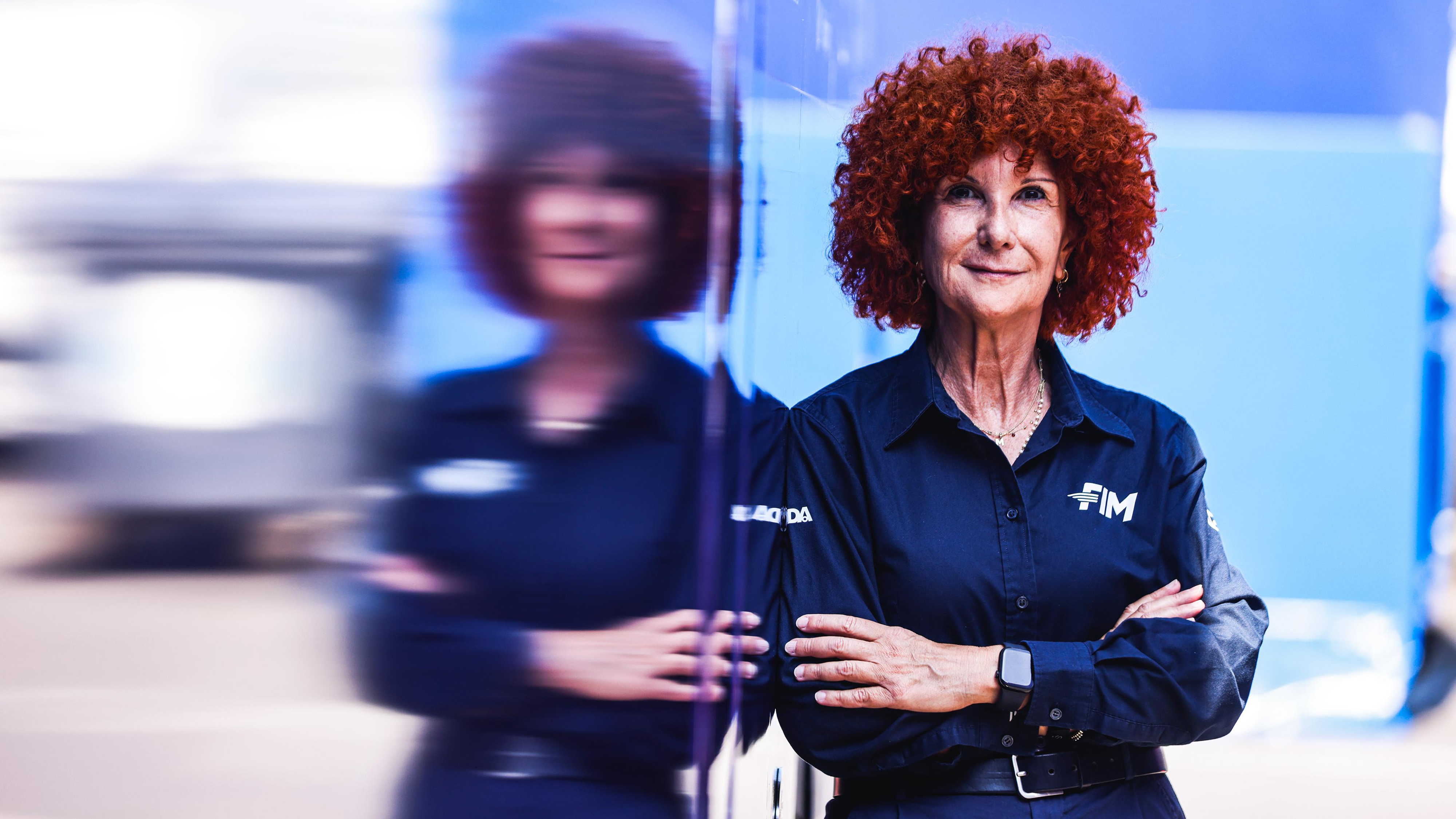
Lazarotti has a critical role to keep your favourite riders safe, making her one of the paddock’s most beloved figures
The MOTUL FIM Superbike World Championship’s trusted FIM Medical Director, Monica Lazzarotti, plays a vital role in ensuring safe conditions at every track, so every rider across the Championship knows they will be in good hands if they push past the limit. For the Italian, she has a multi-faceted role in the paddock, and her passion for the sport drives her to bring her A-game to the track every day.
NO RISK NO REWARD: “We’re not playing golf or tennis here, so we must always remember that there’s an interaction between the rider and the mechanical vehicle”
An iconic face around the paddock since 2014, Lazarotti has been entrusted with providing on-site medical care and working with race control to ensure safe transport of any injured rider, as well as devising and updating safety precautions at every circuit on the calendar before the round. Her role is critical to the Championship, and while it is not without its risks, thanks to people like Monica, WorldSBK continues to prioritise rider safety.
On how they work to protect the riders to the best of their ability, “We’re not playing golf or tennis here, so we must always remember that there’s an interaction between the rider and the mechanical vehicle. So, we think about electronics, speed, bike weight, and so on. The situation is much improved compared to the past, and the goal is to continue improving safety through the protections and studies put in place before any event. We are always taking steps forward in terms of technology, research, and the protections themselves, so I’m very positive about safety. It’s all about working as a team.”
FINDING HER NICHE: “When I was very young, I’d go with my father to a local motocross track to watch the races. At one point, I became passionate about trials racing”
Medicine, and specifically sports medicine, has always called Lazarotti. Even before university, she understood she would specialise in sports medicine. Her mother’s love for sports perhaps buoyed that idea further in her mind; however, it was her early exposure to motocross and trials racing that helped her see the world of motorsport as a career opportunity. Professionally, she started her career in trials racing before working in MotoGP, gaining a deeper understanding of the sport and the hard work involved in circuit racing.
Explaining her career path to the current day, she said: “Right after I finished high school, when I enrolled in medicine, I was already thinking that my specialisation would be sports medicine. My mother is a big sports fan, so maybe that conditioned me a little. When I was very young, I’d go with my father to a local motocross track to watch the races. At one point, I became passionate about trials racing, which is where my work began. I started following the Italian trial championship, and then the Italian trial team in the world championship. My first professional experience of circuit racing was with Clinica Mobile in MotoGP. We’d be there from dawn to dusk, but we were very happy to work in that way. And for me, it was very educational, because I really got to understand the circuit racing world. I had a lot of fun there because, besides working a LOT, the paddock became a family. I still have a great relationship with many people from the MotoGP paddock.”
KEEPING RIDERS SAFE: “At the end of the day, our job is to help them get back on track at the right time, and safely”
From MotoGP, Lazarotti joined WorldSBK back in 2014, where she has since fallen in love with the more tight-knit, familial atmosphere of this paddock. Since her arrival, she is proud that they continue to make strides year in and year out toward rider safety, yet an ever-present challenge she and her team face is communicating to the ever-competitive riders the decision on whether they are ruled unfit or fit to continue racing on a given weekend.
On their continuous work to keep riders safe, she said: “One of the challenges we’ve met is to improve the safety, year after year, by working together. Working in a team for me is a positive challenge: it’s stimulating, you reach a goal more easily, and the final product is better, too. Another challenge for me is educating riders about medical matters and helping them understand why they might be declared unfit. And I have to say we’ve achieved really good results because it’s rare that a rider questions a decision. If you talk to the riders, they understand, but this must be done in advance of any medical checks so that they’re prepared and know what the recovery process might look like. This is a challenge I’d say I’ve met over several years. At the end of the day, our job is to help them get back on track at the right time and safely. It’s not just about their own safety, but also the safety of others who race with them. And they understand this. In my role, it is important, always and above all here, to be empathetic, because if you are not empathetic, you are finished. Empathy is fundamental.”
INCLUSION AS A PRIORITY: “We now have a Women's Championship, but we also allow anyone, irrespective of gender, to compete in the other classes”
Lazarotti was pleased to witness the inaugural season of WorldWCR back in 2024 and provide her same trademark empathetic care for the world’s fastest women on two wheels. She has seen the Championship grow over the last two seasons. While she is proud of the sport’s inclusivity, allowing women to compete in other categories, such as Ana Carrasco (Honda Racing World Supersport) in WorldSSP, there is now a larger platform to support women in motorsport.
On WorldWCR, Lazarotti said: “With WorldWCR, it was all new, even for the women riders themselves, as many of them came here with no knowledge of the World Championship context, so it was a challenge for them too. They’ve grown a lot since the start of 2024, and I think we’ve made some great progress. This is also a very interesting challenge because we are an inclusive sport. We now have a Women's Championship, but we also offer the opportunity for anyone, regardless of gender, to compete in the other classes. So, if a woman wants to compete in a mixed category, she can.”
Catch the upcoming WorldSBK season kicking off in February 2026! Watch every moment with the WorldSBK VideoPass!


